Best Atrial Flutter Treatment In Hyderabad
#Best Cardiac Surgeon in Hyderabad
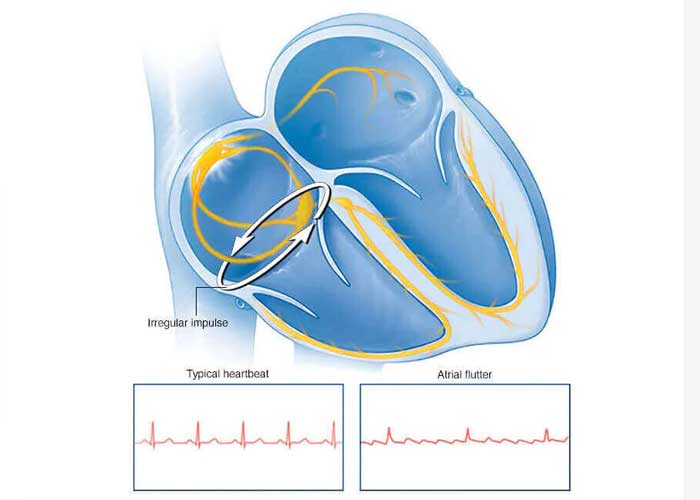
Atrial flutter is a type of arrhythmia or abnormal heart rhythm. In this condition, the heart’s upper chambers, known as atria pump abnormally fast. This often happens due to a malfunction of the electrical activity in the heart. Atrial flutter is a critical condition & can lead to a stroke that may result in permanent disability or even death.
What happens in Atrial Flutter
The short circuit that occurs in atrial flutter allows the electrical impulse to rapidly move around the right atrium, & causes 240 to 400 contractions per minute. The ventricles or the lower chambers of the heart also tend to beat faster, but not as fast as the atria.
What could lead to an atrial flutter?
Research is still ongoing to find what causes atrial flutter. As of now, the scientific community claims that it could be a result of damage to the heart or its electrical system or to parts that affect the heart. But there are some risk factors that have been identified. These may be underlying medical conditions, medications used for certain conditions or lifestyle factors.
Older age
High blood pressure
Coronary heart disease
Congenital heart conditions
History of heart attack
History of heart surgery
Lung problems
Thyroid disorders
Chronic anxiety or stress
Smoking
Diabetes
Diabetes
Alcohol misuse
Untreated sleep apnea
Are there any signs?
Symptoms of atrial flutter may last for a few hours, days or even weeks at a time. Also, some people do not experience any symptoms at all. Common signs include:
Palpitations
Shortness of breath
Unexplained anxiety
Difficulty exercising
Confusion
Fatigue
Heart or lung disease patients with atrial flutter may experience other symptoms like:
Chest pain or discomfort
Feeling dizzy or lightheaded
Fainting
How is it diagnosed?
Your cardiologist may consider Atrial flutter if your heartbeat at rest exceeds 120bpm and/or if the ECG report shows signs of it. Your doctor may enquire about your family & personal medical history to diagnose the condition. Certain tests such as the following may also be recommended:
Echocardiogram: To measure the flow of blood through the heart & to check if heart is showing signs of weakness due to tachycardia induced myopathy or dilation of the upper chambers of the heart.
Electrocardiogram: To record the electrical patterns of the heart.
Holter Monitor: To monitor the heart’s rhythm for a period of at least 24 hours.
Can it be treated?
The goal of treating atrial flutter is to restore heart’s rhythm back to 60-100 contractions a minute. As such, the treatment depends on how severe the condition is & how best you respond to medications.
In cases where the cause is an underlying medical condition such as thyroid, your doctor would recommend medications to treat that first.
Medications such as calcium channel blockers, beta blockers & digoxin are often used to slow or regulate the heart rate.
Electrical Cardioversion may also be considered as a treatment option. It involves use of electricity to shock the heart’s rhythm back to normal.
Dr Sudheer Koganti is the best cardiologist in Hyderabad & offers the best treatment for atrial flutter.
FAQs
Atrial flutter is a type of abnormal heart rhythm where the upper chambers beat very fast but in a more regular pattern than atrial fibrillation. While both are arrhythmias, atrial flutter tends to be more organized, but still requires evaluation to prevent complications like stroke.
Atrial flutter often causes palpitations, a fast heartbeat, shortness of breath, fatigue or dizziness. Some people may not notice symptoms, especially in early stages. If symptoms occur frequently, it’s important to consult a cardiologist for proper diagnosis.
Atrial flutter is usually linked to underlying heart conditions like coronary artery disease, high blood pressure or previous heart surgery. Other triggers include thyroid disorders, alcohol use and stress. Identifying the cause helps guide the right treatment approach.
Atrial flutter is diagnosed using tests like ECG, Holter monitoring or echocardiography. Treatment may include medications to control heart rate, blood thinners to reduce stroke risk or procedures like catheter ablation. Cardiologists in areas like Nanakramguda and Financial District offer these advanced treatments.
You should see a cardiologist if you experience frequent palpitations, unexplained fatigue or irregular heartbeat. Early consultation with a qualified cardiologist in Hyderabad helps prevent complications and ensures timely treatment.
Yes, atrial flutter can often be effectively treated and sometimes cured with procedures like catheter ablation. Many patients experience long-term relief after treatment. However, follow-up care is important to monitor heart health and prevent recurrence.